PyTorch框架——基于深度学习ResNet18神经网络蘑菇图像识别分类系统
·
第一步:准备数据
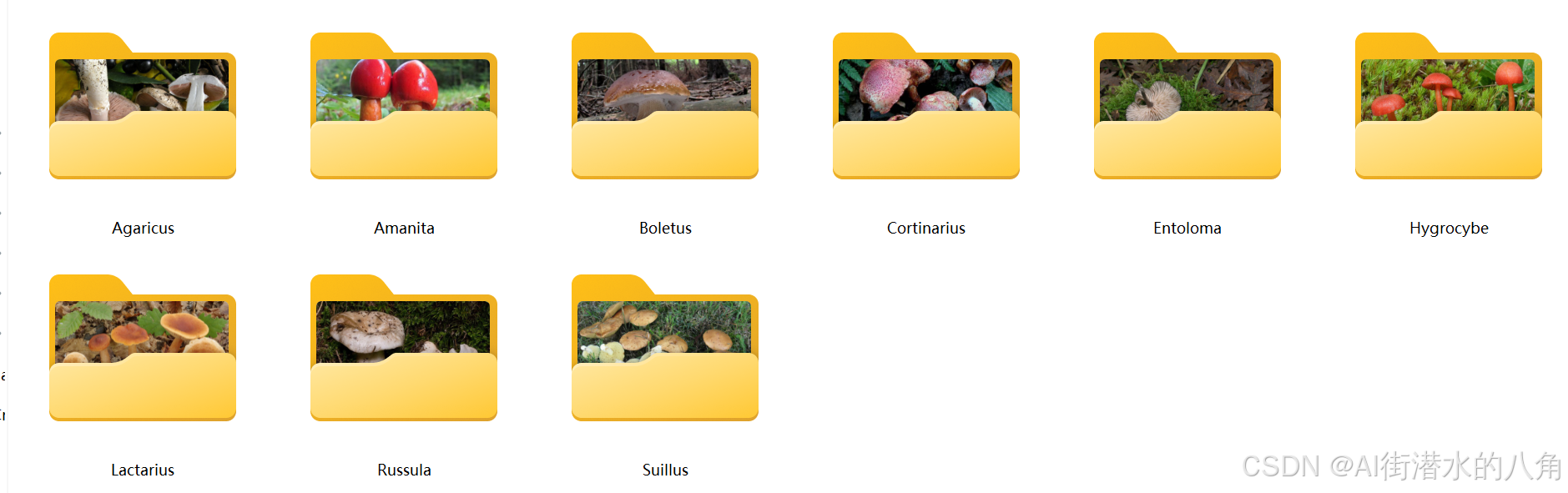
蘑菇数据集,英文为 mushrooms,总共有6000多 张图片。
共九种,具体信息如下:self.class_indict = ['Agaricus', 'Amanita', 'Boletus', 'Cortinarius', 'Entoloma', 'Hygrocybe', 'Lactarius', 'Russula', 'Suillus']
第二步:搭建模型
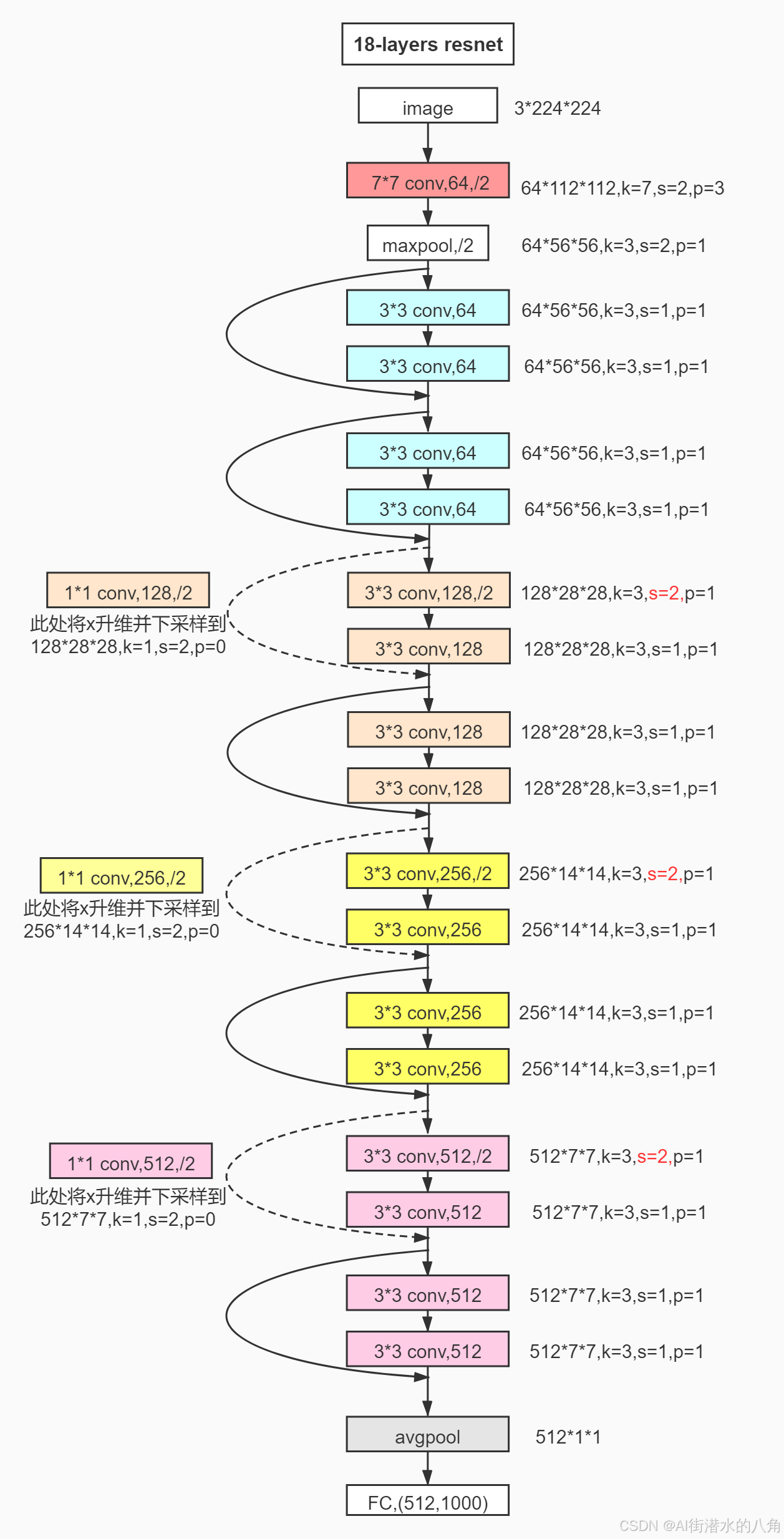
ResNet18中的"18"指的是网络中的加权层数量。具体来说,它包含了18个卷积层和全连接层。
ResNet18的架构包括:
- 1个7x7卷积层
- 16个3x3卷积层(组织成8个残差块,每个块包含2个卷积层)
- 1个全连接层
下面为大家展示的是ResNet18的整体架构。
第三步:训练代码
1)损失函数为:交叉熵损失函数
2)ResNet18代码:
from functools import partial
from typing import Any, Callable, List, Optional, Type, Union
import torch
import torch.nn as nn
from torch import Tensor
from ..transforms._presets import ImageClassification
from ..utils import _log_api_usage_once
from ._api import register_model, Weights, WeightsEnum
from ._meta import _IMAGENET_CATEGORIES
from ._utils import _ovewrite_named_param, handle_legacy_interface
__all__ = [
"ResNet",
"ResNet18_Weights",
"ResNet34_Weights",
"ResNet50_Weights",
"ResNet101_Weights",
"ResNet152_Weights",
"ResNeXt50_32X4D_Weights",
"ResNeXt101_32X8D_Weights",
"ResNeXt101_64X4D_Weights",
"Wide_ResNet50_2_Weights",
"Wide_ResNet101_2_Weights",
"resnet18",
"resnet34",
"resnet50",
"resnet101",
"resnet152",
"resnext50_32x4d",
"resnext101_32x8d",
"resnext101_64x4d",
"wide_resnet50_2",
"wide_resnet101_2",
]
def conv3x3(in_planes: int, out_planes: int, stride: int = 1, groups: int = 1, dilation: int = 1) -> nn.Conv2d:
"""3x3 convolution with padding"""
return nn.Conv2d(
in_planes,
out_planes,
kernel_size=3,
stride=stride,
padding=dilation,
groups=groups,
bias=False,
dilation=dilation,
)
def conv1x1(in_planes: int, out_planes: int, stride: int = 1) -> nn.Conv2d:
"""1x1 convolution"""
return nn.Conv2d(in_planes, out_planes, kernel_size=1, stride=stride, bias=False)
class BasicBlock(nn.Module):
expansion: int = 1
def __init__(
self,
inplanes: int,
planes: int,
stride: int = 1,
downsample: Optional[nn.Module] = None,
groups: int = 1,
base_width: int = 64,
dilation: int = 1,
norm_layer: Optional[Callable[..., nn.Module]] = None,
) -> None:
super().__init__()
if norm_layer is None:
norm_layer = nn.BatchNorm2d
if groups != 1 or base_width != 64:
raise ValueError("BasicBlock only supports groups=1 and base_width=64")
if dilation > 1:
raise NotImplementedError("Dilation > 1 not supported in BasicBlock")
# Both self.conv1 and self.downsample layers downsample the input when stride != 1
self.conv1 = conv3x3(inplanes, planes, stride)
self.bn1 = norm_layer(planes)
self.relu = nn.ReLU(inplace=True)
self.conv2 = conv3x3(planes, planes)
self.bn2 = norm_layer(planes)
self.downsample = downsample
self.stride = stride
def forward(self, x: Tensor) -> Tensor:
identity = x
out = self.conv1(x)
out = self.bn1(out)
out = self.relu(out)
out = self.conv2(out)
out = self.bn2(out)
if self.downsample is not None:
identity = self.downsample(x)
out += identity
out = self.relu(out)
return out
class Bottleneck(nn.Module):
# Bottleneck in torchvision places the stride for downsampling at 3x3 convolution(self.conv2)
# while original implementation places the stride at the first 1x1 convolution(self.conv1)
# according to "Deep residual learning for image recognition" https://arxiv.org/abs/1512.03385.
# This variant is also known as ResNet V1.5 and improves accuracy according to
# https://ngc.nvidia.com/catalog/model-scripts/nvidia:resnet_50_v1_5_for_pytorch.
expansion: int = 4
def __init__(
self,
inplanes: int,
planes: int,
stride: int = 1,
downsample: Optional[nn.Module] = None,
groups: int = 1,
base_width: int = 64,
dilation: int = 1,
norm_layer: Optional[Callable[..., nn.Module]] = None,
) -> None:
super().__init__()
if norm_layer is None:
norm_layer = nn.BatchNorm2d
width = int(planes * (base_width / 64.0)) * groups
# Both self.conv2 and self.downsample layers downsample the input when stride != 1
self.conv1 = conv1x1(inplanes, width)
self.bn1 = norm_layer(width)
self.conv2 = conv3x3(width, width, stride, groups, dilation)
self.bn2 = norm_layer(width)
self.conv3 = conv1x1(width, planes * self.expansion)
self.bn3 = norm_layer(planes * self.expansion)
self.relu = nn.ReLU(inplace=True)
self.downsample = downsample
self.stride = stride
def forward(self, x: Tensor) -> Tensor:
identity = x
out = self.conv1(x)
out = self.bn1(out)
out = self.relu(out)
out = self.conv2(out)
out = self.bn2(out)
out = self.relu(out)
out = self.conv3(out)
out = self.bn3(out)
if self.downsample is not None:
identity = self.downsample(x)
out += identity
out = self.relu(out)
return out
class ResNet(nn.Module):
def __init__(
self,
block: Type[Union[BasicBlock, Bottleneck]],
layers: List[int],
num_classes: int = 1000,
zero_init_residual: bool = False,
groups: int = 1,
width_per_group: int = 64,
replace_stride_with_dilation: Optional[List[bool]] = None,
norm_layer: Optional[Callable[..., nn.Module]] = None,
) -> None:
super().__init__()
_log_api_usage_once(self)
if norm_layer is None:
norm_layer = nn.BatchNorm2d
self._norm_layer = norm_layer
self.inplanes = 64
self.dilation = 1
if replace_stride_with_dilation is None:
# each element in the tuple indicates if we should replace
# the 2x2 stride with a dilated convolution instead
replace_stride_with_dilation = [False, False, False]
if len(replace_stride_with_dilation) != 3:
raise ValueError(
"replace_stride_with_dilation should be None "
f"or a 3-element tuple, got {replace_stride_with_dilation}"
)
self.groups = groups
self.base_width = width_per_group
self.conv1 = nn.Conv2d(3, self.inplanes, kernel_size=7, stride=2, padding=3, bias=False)
self.bn1 = norm_layer(self.inplanes)
self.relu = nn.ReLU(inplace=True)
self.maxpool = nn.MaxPool2d(kernel_size=3, stride=2, padding=1)
self.layer1 = self._make_layer(block, 64, layers[0])
self.layer2 = self._make_layer(block, 128, layers[1], stride=2, dilate=replace_stride_with_dilation[0])
self.layer3 = self._make_layer(block, 256, layers[2], stride=2, dilate=replace_stride_with_dilation[1])
self.layer4 = self._make_layer(block, 512, layers[3], stride=2, dilate=replace_stride_with_dilation[2])
self.avgpool = nn.AdaptiveAvgPool2d((1, 1))
self.fc = nn.Linear(512 * block.expansion, num_classes)
for m in self.modules():
if isinstance(m, nn.Conv2d):
nn.init.kaiming_normal_(m.weight, mode="fan_out", nonlinearity="relu")
elif isinstance(m, (nn.BatchNorm2d, nn.GroupNorm)):
nn.init.constant_(m.weight, 1)
nn.init.constant_(m.bias, 0)
# Zero-initialize the last BN in each residual branch,
# so that the residual branch starts with zeros, and each residual block behaves like an identity.
# This improves the model by 0.2~0.3% according to https://arxiv.org/abs/1706.02677
if zero_init_residual:
for m in self.modules():
if isinstance(m, Bottleneck) and m.bn3.weight is not None:
nn.init.constant_(m.bn3.weight, 0) # type: ignore[arg-type]
elif isinstance(m, BasicBlock) and m.bn2.weight is not None:
nn.init.constant_(m.bn2.weight, 0) # type: ignore[arg-type]
def _make_layer(
self,
block: Type[Union[BasicBlock, Bottleneck]],
planes: int,
blocks: int,
stride: int = 1,
dilate: bool = False,
) -> nn.Sequential:
norm_layer = self._norm_layer
downsample = None
previous_dilation = self.dilation
if dilate:
self.dilation *= stride
stride = 1
if stride != 1 or self.inplanes != planes * block.expansion:
downsample = nn.Sequential(
conv1x1(self.inplanes, planes * block.expansion, stride),
norm_layer(planes * block.expansion),
)
layers = []
layers.append(
block(
self.inplanes, planes, stride, downsample, self.groups, self.base_width, previous_dilation, norm_layer
)
)
self.inplanes = planes * block.expansion
for _ in range(1, blocks):
layers.append(
block(
self.inplanes,
planes,
groups=self.groups,
base_width=self.base_width,
dilation=self.dilation,
norm_layer=norm_layer,
)
)
return nn.Sequential(*layers)
def _forward_impl(self, x: Tensor) -> Tensor:
# See note [TorchScript super()]
x = self.conv1(x)
x = self.bn1(x)
x = self.relu(x)
x = self.maxpool(x)
x = self.layer1(x)
x = self.layer2(x)
x = self.layer3(x)
x = self.layer4(x)
x = self.avgpool(x)
x = torch.flatten(x, 1)
x = self.fc(x)
return x
def forward(self, x: Tensor) -> Tensor:
return self._forward_impl(x)
def _resnet(
block: Type[Union[BasicBlock, Bottleneck]],
layers: List[int],
weights: Optional[WeightsEnum],
progress: bool,
**kwargs: Any,
) -> ResNet:
if weights is not None:
_ovewrite_named_param(kwargs, "num_classes", len(weights.meta["categories"]))
model = ResNet(block, layers, **kwargs)
if weights is not None:
model.load_state_dict(weights.get_state_dict(progress=progress, check_hash=True))
return model
_COMMON_META = {
"min_size": (1, 1),
"categories": _IMAGENET_CATEGORIES,
}
class ResNet18_Weights(WeightsEnum):
IMAGENET1K_V1 = Weights(
url="https://download.pytorch.org/models/resnet18-f37072fd.pth",
transforms=partial(ImageClassification, crop_size=224),
meta={
**_COMMON_META,
"num_params": 11689512,
"recipe": "https://github.com/pytorch/vision/tree/main/references/classification#resnet",
"_metrics": {
"ImageNet-1K": {
"acc@1": 69.758,
"acc@5": 89.078,
}
},
"_ops": 1.814,
"_file_size": 44.661,
"_docs": """These weights reproduce closely the results of the paper using a simple training recipe.""",
},
)
DEFAULT = IMAGENET1K_V1
class ResNet34_Weights(WeightsEnum):
IMAGENET1K_V1 = Weights(
url="https://download.pytorch.org/models/resnet34-b627a593.pth",
transforms=partial(ImageClassification, crop_size=224),
meta={
**_COMMON_META,
"num_params": 21797672,
"recipe": "https://github.com/pytorch/vision/tree/main/references/classification#resnet",
"_metrics": {
"ImageNet-1K": {
"acc@1": 73.314,
"acc@5": 91.420,
}
},
"_ops": 3.664,
"_file_size": 83.275,
"_docs": """These weights reproduce closely the results of the paper using a simple training recipe.""",
},
)
DEFAULT = IMAGENET1K_V1
class ResNet50_Weights(WeightsEnum):
IMAGENET1K_V1 = Weights(
url="https://download.pytorch.org/models/resnet50-0676ba61.pth",
transforms=partial(ImageClassification, crop_size=224),
meta={
**_COMMON_META,
"num_params": 25557032,
"recipe": "https://github.com/pytorch/vision/tree/main/references/classification#resnet",
"_metrics": {
"ImageNet-1K": {
"acc@1": 76.130,
"acc@5": 92.862,
}
},
"_ops": 4.089,
"_file_size": 97.781,
"_docs": """These weights reproduce closely the results of the paper using a simple training recipe.""",
},
)
IMAGENET1K_V2 = Weights(
url="https://download.pytorch.org/models/resnet50-11ad3fa6.pth",
transforms=partial(ImageClassification, crop_size=224, resize_size=232),
meta={
**_COMMON_META,
"num_params": 25557032,
"recipe": "https://github.com/pytorch/vision/issues/3995#issuecomment-1013906621",
"_metrics": {
"ImageNet-1K": {
"acc@1": 80.858,
"acc@5": 95.434,
}
},
"_ops": 4.089,
"_file_size": 97.79,
"_docs": """
These weights improve upon the results of the original paper by using TorchVision's `new training recipe
<https://pytorch.org/blog/how-to-train-state-of-the-art-models-using-torchvision-latest-primitives/>`_.
""",
},
)
DEFAULT = IMAGENET1K_V2
class ResNet101_Weights(WeightsEnum):
IMAGENET1K_V1 = Weights(
url="https://download.pytorch.org/models/resnet101-63fe2227.pth",
transforms=partial(ImageClassification, crop_size=224),
meta={
**_COMMON_META,
"num_params": 44549160,
"recipe": "https://github.com/pytorch/vision/tree/main/references/classification#resnet",
"_metrics": {
"ImageNet-1K": {
"acc@1": 77.374,
"acc@5": 93.546,
}
},
"_ops": 7.801,
"_file_size": 170.511,
"_docs": """These weights reproduce closely the results of the paper using a simple training recipe.""",
},
)
IMAGENET1K_V2 = Weights(
url="https://download.pytorch.org/models/resnet101-cd907fc2.pth",
transforms=partial(ImageClassification, crop_size=224, resize_size=232),
meta={
**_COMMON_META,
"num_params": 44549160,
"recipe": "https://github.com/pytorch/vision/issues/3995#new-recipe",
"_metrics": {
"ImageNet-1K": {
"acc@1": 81.886,
"acc@5": 95.780,
}
},
"_ops": 7.801,
"_file_size": 170.53,
"_docs": """
These weights improve upon the results of the original paper by using TorchVision's `new training recipe
<https://pytorch.org/blog/how-to-train-state-of-the-art-models-using-torchvision-latest-primitives/>`_.
""",
},
)
DEFAULT = IMAGENET1K_V2
class ResNet152_Weights(WeightsEnum):
IMAGENET1K_V1 = Weights(
url="https://download.pytorch.org/models/resnet152-394f9c45.pth",
transforms=partial(ImageClassification, crop_size=224),
meta={
**_COMMON_META,
"num_params": 60192808,
"recipe": "https://github.com/pytorch/vision/tree/main/references/classification#resnet",
"_metrics": {
"ImageNet-1K": {
"acc@1": 78.312,
"acc@5": 94.046,
}
},
"_ops": 11.514,
"_file_size": 230.434,
"_docs": """These weights reproduce closely the results of the paper using a simple training recipe.""",
},
)
IMAGENET1K_V2 = Weights(
url="https://download.pytorch.org/models/resnet152-f82ba261.pth",
transforms=partial(ImageClassification, crop_size=224, resize_size=232),
meta={
**_COMMON_META,
"num_params": 60192808,
"recipe": "https://github.com/pytorch/vision/issues/3995#new-recipe",
"_metrics": {
"ImageNet-1K": {
"acc@1": 82.284,
"acc@5": 96.002,
}
},
"_ops": 11.514,
"_file_size": 230.474,
"_docs": """
These weights improve upon the results of the original paper by using TorchVision's `new training recipe
<https://pytorch.org/blog/how-to-train-state-of-the-art-models-using-torchvision-latest-primitives/>`_.
""",
},
)
DEFAULT = IMAGENET1K_V2
class ResNeXt50_32X4D_Weights(WeightsEnum):
IMAGENET1K_V1 = Weights(
url="https://download.pytorch.org/models/resnext50_32x4d-7cdf4587.pth",
transforms=partial(ImageClassification, crop_size=224),
meta={
**_COMMON_META,
"num_params": 25028904,
"recipe": "https://github.com/pytorch/vision/tree/main/references/classification#resnext",
"_metrics": {
"ImageNet-1K": {
"acc@1": 77.618,
"acc@5": 93.698,
}
},
"_ops": 4.23,
"_file_size": 95.789,
"_docs": """These weights reproduce closely the results of the paper using a simple training recipe.""",
},
)
IMAGENET1K_V2 = Weights(
url="https://download.pytorch.org/models/resnext50_32x4d-1a0047aa.pth",
transforms=partial(ImageClassification, crop_size=224, resize_size=232),
meta={
**_COMMON_META,
"num_params": 25028904,
"recipe": "https://github.com/pytorch/vision/issues/3995#new-recipe",
"_metrics": {
"ImageNet-1K": {
"acc@1": 81.198,
"acc@5": 95.340,
}
},
"_ops": 4.23,
"_file_size": 95.833,
"_docs": """
These weights improve upon the results of the original paper by using TorchVision's `new training recipe
<https://pytorch.org/blog/how-to-train-state-of-the-art-models-using-torchvision-latest-primitives/>`_.
""",
},
)
DEFAULT = IMAGENET1K_V2
class ResNeXt101_32X8D_Weights(WeightsEnum):
IMAGENET1K_V1 = Weights(
url="https://download.pytorch.org/models/resnext101_32x8d-8ba56ff5.pth",
transforms=partial(ImageClassification, crop_size=224),
meta={
**_COMMON_META,
"num_params": 88791336,
"recipe": "https://github.com/pytorch/vision/tree/main/references/classification#resnext",
"_metrics": {
"ImageNet-1K": {
"acc@1": 79.312,
"acc@5": 94.526,
}
},
"_ops": 16.414,
"_file_size": 339.586,
"_docs": """These weights reproduce closely the results of the paper using a simple training recipe.""",
},
)
IMAGENET1K_V2 = Weights(
url="https://download.pytorch.org/models/resnext101_32x8d-110c445d.pth",
transforms=partial(ImageClassification, crop_size=224, resize_size=232),
meta={
**_COMMON_META,
"num_params": 88791336,
"recipe": "https://github.com/pytorch/vision/issues/3995#new-recipe-with-fixres",
"_metrics": {
"ImageNet-1K": {
"acc@1": 82.834,
"acc@5": 96.228,
}
},
"_ops": 16.414,
"_file_size": 339.673,
"_docs": """
These weights improve upon the results of the original paper by using TorchVision's `new training recipe
<https://pytorch.org/blog/how-to-train-state-of-the-art-models-using-torchvision-latest-primitives/>`_.
""",
},
)
DEFAULT = IMAGENET1K_V2
class ResNeXt101_64X4D_Weights(WeightsEnum):
IMAGENET1K_V1 = Weights(
url="https://download.pytorch.org/models/resnext101_64x4d-173b62eb.pth",
transforms=partial(ImageClassification, crop_size=224, resize_size=232),
meta={
**_COMMON_META,
"num_params": 83455272,
"recipe": "https://github.com/pytorch/vision/pull/5935",
"_metrics": {
"ImageNet-1K": {
"acc@1": 83.246,
"acc@5": 96.454,
}
},
"_ops": 15.46,
"_file_size": 319.318,
"_docs": """
These weights were trained from scratch by using TorchVision's `new training recipe
<https://pytorch.org/blog/how-to-train-state-of-the-art-models-using-torchvision-latest-primitives/>`_.
""",
},
)
DEFAULT = IMAGENET1K_V1
class Wide_ResNet50_2_Weights(WeightsEnum):
IMAGENET1K_V1 = Weights(
url="https://download.pytorch.org/models/wide_resnet50_2-95faca4d.pth",
transforms=partial(ImageClassification, crop_size=224),
meta={
**_COMMON_META,
"num_params": 68883240,
"recipe": "https://github.com/pytorch/vision/pull/912#issue-445437439",
"_metrics": {
"ImageNet-1K": {
"acc@1": 78.468,
"acc@5": 94.086,
}
},
"_ops": 11.398,
"_file_size": 131.82,
"_docs": """These weights reproduce closely the results of the paper using a simple training recipe.""",
},
)
IMAGENET1K_V2 = Weights(
url="https://download.pytorch.org/models/wide_resnet50_2-9ba9bcbe.pth",
transforms=partial(ImageClassification, crop_size=224, resize_size=232),
meta={
**_COMMON_META,
"num_params": 68883240,
"recipe": "https://github.com/pytorch/vision/issues/3995#new-recipe-with-fixres",
"_metrics": {
"ImageNet-1K": {
"acc@1": 81.602,
"acc@5": 95.758,
}
},
"_ops": 11.398,
"_file_size": 263.124,
"_docs": """
These weights improve upon the results of the original paper by using TorchVision's `new training recipe
<https://pytorch.org/blog/how-to-train-state-of-the-art-models-using-torchvision-latest-primitives/>`_.
""",
},
)
DEFAULT = IMAGENET1K_V2
class Wide_ResNet101_2_Weights(WeightsEnum):
IMAGENET1K_V1 = Weights(
url="https://download.pytorch.org/models/wide_resnet101_2-32ee1156.pth",
transforms=partial(ImageClassification, crop_size=224),
meta={
**_COMMON_META,
"num_params": 126886696,
"recipe": "https://github.com/pytorch/vision/pull/912#issue-445437439",
"_metrics": {
"ImageNet-1K": {
"acc@1": 78.848,
"acc@5": 94.284,
}
},
"_ops": 22.753,
"_file_size": 242.896,
"_docs": """These weights reproduce closely the results of the paper using a simple training recipe.""",
},
)
IMAGENET1K_V2 = Weights(
url="https://download.pytorch.org/models/wide_resnet101_2-d733dc28.pth",
transforms=partial(ImageClassification, crop_size=224, resize_size=232),
meta={
**_COMMON_META,
"num_params": 126886696,
"recipe": "https://github.com/pytorch/vision/issues/3995#new-recipe",
"_metrics": {
"ImageNet-1K": {
"acc@1": 82.510,
"acc@5": 96.020,
}
},
"_ops": 22.753,
"_file_size": 484.747,
"_docs": """
These weights improve upon the results of the original paper by using TorchVision's `new training recipe
<https://pytorch.org/blog/how-to-train-state-of-the-art-models-using-torchvision-latest-primitives/>`_.
""",
},
)
DEFAULT = IMAGENET1K_V2
@register_model()
@handle_legacy_interface(weights=("pretrained", ResNet18_Weights.IMAGENET1K_V1))
def resnet18(*, weights: Optional[ResNet18_Weights] = None, progress: bool = True, **kwargs: Any) -> ResNet:
"""ResNet-18 from `Deep Residual Learning for Image Recognition <https://arxiv.org/abs/1512.03385>`__.
Args:
weights (:class:`~torchvision.models.ResNet18_Weights`, optional): The
pretrained weights to use. See
:class:`~torchvision.models.ResNet18_Weights` below for
more details, and possible values. By default, no pre-trained
weights are used.
progress (bool, optional): If True, displays a progress bar of the
download to stderr. Default is True.
**kwargs: parameters passed to the ``torchvision.models.resnet.ResNet``
base class. Please refer to the `source code
<https://github.com/pytorch/vision/blob/main/torchvision/models/resnet.py>`_
for more details about this class.
.. autoclass:: torchvision.models.ResNet18_Weights
:members:
"""
weights = ResNet18_Weights.verify(weights)
return _resnet(BasicBlock, [2, 2, 2, 2], weights, progress, **kwargs)
@register_model()
@handle_legacy_interface(weights=("pretrained", ResNet34_Weights.IMAGENET1K_V1))
def resnet34(*, weights: Optional[ResNet34_Weights] = None, progress: bool = True, **kwargs: Any) -> ResNet:
"""ResNet-34 from `Deep Residual Learning for Image Recognition <https://arxiv.org/abs/1512.03385>`__.
Args:
weights (:class:`~torchvision.models.ResNet34_Weights`, optional): The
pretrained weights to use. See
:class:`~torchvision.models.ResNet34_Weights` below for
more details, and possible values. By default, no pre-trained
weights are used.
progress (bool, optional): If True, displays a progress bar of the
download to stderr. Default is True.
**kwargs: parameters passed to the ``torchvision.models.resnet.ResNet``
base class. Please refer to the `source code
<https://github.com/pytorch/vision/blob/main/torchvision/models/resnet.py>`_
for more details about this class.
.. autoclass:: torchvision.models.ResNet34_Weights
:members:
"""
weights = ResNet34_Weights.verify(weights)
return _resnet(BasicBlock, [3, 4, 6, 3], weights, progress, **kwargs)
@register_model()
@handle_legacy_interface(weights=("pretrained", ResNet50_Weights.IMAGENET1K_V1))
def resnet50(*, weights: Optional[ResNet50_Weights] = None, progress: bool = True, **kwargs: Any) -> ResNet:
"""ResNet-50 from `Deep Residual Learning for Image Recognition <https://arxiv.org/abs/1512.03385>`__.
.. note::
The bottleneck of TorchVision places the stride for downsampling to the second 3x3
convolution while the original paper places it to the first 1x1 convolution.
This variant improves the accuracy and is known as `ResNet V1.5
<https://ngc.nvidia.com/catalog/model-scripts/nvidia:resnet_50_v1_5_for_pytorch>`_.
Args:
weights (:class:`~torchvision.models.ResNet50_Weights`, optional): The
pretrained weights to use. See
:class:`~torchvision.models.ResNet50_Weights` below for
more details, and possible values. By default, no pre-trained
weights are used.
progress (bool, optional): If True, displays a progress bar of the
download to stderr. Default is True.
**kwargs: parameters passed to the ``torchvision.models.resnet.ResNet``
base class. Please refer to the `source code
<https://github.com/pytorch/vision/blob/main/torchvision/models/resnet.py>`_
for more details about this class.
.. autoclass:: torchvision.models.ResNet50_Weights
:members:
"""
weights = ResNet50_Weights.verify(weights)
return _resnet(Bottleneck, [3, 4, 6, 3], weights, progress, **kwargs)
@register_model()
@handle_legacy_interface(weights=("pretrained", ResNet101_Weights.IMAGENET1K_V1))
def resnet101(*, weights: Optional[ResNet101_Weights] = None, progress: bool = True, **kwargs: Any) -> ResNet:
"""ResNet-101 from `Deep Residual Learning for Image Recognition <https://arxiv.org/abs/1512.03385>`__.
.. note::
The bottleneck of TorchVision places the stride for downsampling to the second 3x3
convolution while the original paper places it to the first 1x1 convolution.
This variant improves the accuracy and is known as `ResNet V1.5
<https://ngc.nvidia.com/catalog/model-scripts/nvidia:resnet_50_v1_5_for_pytorch>`_.
Args:
weights (:class:`~torchvision.models.ResNet101_Weights`, optional): The
pretrained weights to use. See
:class:`~torchvision.models.ResNet101_Weights` below for
more details, and possible values. By default, no pre-trained
weights are used.
progress (bool, optional): If True, displays a progress bar of the
download to stderr. Default is True.
**kwargs: parameters passed to the ``torchvision.models.resnet.ResNet``
base class. Please refer to the `source code
<https://github.com/pytorch/vision/blob/main/torchvision/models/resnet.py>`_
for more details about this class.
.. autoclass:: torchvision.models.ResNet101_Weights
:members:
"""
weights = ResNet101_Weights.verify(weights)
return _resnet(Bottleneck, [3, 4, 23, 3], weights, progress, **kwargs)
@register_model()
@handle_legacy_interface(weights=("pretrained", ResNet152_Weights.IMAGENET1K_V1))
def resnet152(*, weights: Optional[ResNet152_Weights] = None, progress: bool = True, **kwargs: Any) -> ResNet:
"""ResNet-152 from `Deep Residual Learning for Image Recognition <https://arxiv.org/abs/1512.03385>`__.
.. note::
The bottleneck of TorchVision places the stride for downsampling to the second 3x3
convolution while the original paper places it to the first 1x1 convolution.
This variant improves the accuracy and is known as `ResNet V1.5
<https://ngc.nvidia.com/catalog/model-scripts/nvidia:resnet_50_v1_5_for_pytorch>`_.
Args:
weights (:class:`~torchvision.models.ResNet152_Weights`, optional): The
pretrained weights to use. See
:class:`~torchvision.models.ResNet152_Weights` below for
more details, and possible values. By default, no pre-trained
weights are used.
progress (bool, optional): If True, displays a progress bar of the
download to stderr. Default is True.
**kwargs: parameters passed to the ``torchvision.models.resnet.ResNet``
base class. Please refer to the `source code
<https://github.com/pytorch/vision/blob/main/torchvision/models/resnet.py>`_
for more details about this class.
.. autoclass:: torchvision.models.ResNet152_Weights
:members:
"""
weights = ResNet152_Weights.verify(weights)
return _resnet(Bottleneck, [3, 8, 36, 3], weights, progress, **kwargs)
@register_model()
@handle_legacy_interface(weights=("pretrained", ResNeXt50_32X4D_Weights.IMAGENET1K_V1))
def resnext50_32x4d(
*, weights: Optional[ResNeXt50_32X4D_Weights] = None, progress: bool = True, **kwargs: Any
) -> ResNet:
"""ResNeXt-50 32x4d model from
`Aggregated Residual Transformation for Deep Neural Networks <https://arxiv.org/abs/1611.05431>`_.
Args:
weights (:class:`~torchvision.models.ResNeXt50_32X4D_Weights`, optional): The
pretrained weights to use. See
:class:`~torchvision.models.ResNext50_32X4D_Weights` below for
more details, and possible values. By default, no pre-trained
weights are used.
progress (bool, optional): If True, displays a progress bar of the
download to stderr. Default is True.
**kwargs: parameters passed to the ``torchvision.models.resnet.ResNet``
base class. Please refer to the `source code
<https://github.com/pytorch/vision/blob/main/torchvision/models/resnet.py>`_
for more details about this class.
.. autoclass:: torchvision.models.ResNeXt50_32X4D_Weights
:members:
"""
weights = ResNeXt50_32X4D_Weights.verify(weights)
_ovewrite_named_param(kwargs, "groups", 32)
_ovewrite_named_param(kwargs, "width_per_group", 4)
return _resnet(Bottleneck, [3, 4, 6, 3], weights, progress, **kwargs)
@register_model()
@handle_legacy_interface(weights=("pretrained", ResNeXt101_32X8D_Weights.IMAGENET1K_V1))
def resnext101_32x8d(
*, weights: Optional[ResNeXt101_32X8D_Weights] = None, progress: bool = True, **kwargs: Any
) -> ResNet:
"""ResNeXt-101 32x8d model from
`Aggregated Residual Transformation for Deep Neural Networks <https://arxiv.org/abs/1611.05431>`_.
Args:
weights (:class:`~torchvision.models.ResNeXt101_32X8D_Weights`, optional): The
pretrained weights to use. See
:class:`~torchvision.models.ResNeXt101_32X8D_Weights` below for
more details, and possible values. By default, no pre-trained
weights are used.
progress (bool, optional): If True, displays a progress bar of the
download to stderr. Default is True.
**kwargs: parameters passed to the ``torchvision.models.resnet.ResNet``
base class. Please refer to the `source code
<https://github.com/pytorch/vision/blob/main/torchvision/models/resnet.py>`_
for more details about this class.
.. autoclass:: torchvision.models.ResNeXt101_32X8D_Weights
:members:
"""
weights = ResNeXt101_32X8D_Weights.verify(weights)
_ovewrite_named_param(kwargs, "groups", 32)
_ovewrite_named_param(kwargs, "width_per_group", 8)
return _resnet(Bottleneck, [3, 4, 23, 3], weights, progress, **kwargs)
@register_model()
@handle_legacy_interface(weights=("pretrained", ResNeXt101_64X4D_Weights.IMAGENET1K_V1))
def resnext101_64x4d(
*, weights: Optional[ResNeXt101_64X4D_Weights] = None, progress: bool = True, **kwargs: Any
) -> ResNet:
"""ResNeXt-101 64x4d model from
`Aggregated Residual Transformation for Deep Neural Networks <https://arxiv.org/abs/1611.05431>`_.
Args:
weights (:class:`~torchvision.models.ResNeXt101_64X4D_Weights`, optional): The
pretrained weights to use. See
:class:`~torchvision.models.ResNeXt101_64X4D_Weights` below for
more details, and possible values. By default, no pre-trained
weights are used.
progress (bool, optional): If True, displays a progress bar of the
download to stderr. Default is True.
**kwargs: parameters passed to the ``torchvision.models.resnet.ResNet``
base class. Please refer to the `source code
<https://github.com/pytorch/vision/blob/main/torchvision/models/resnet.py>`_
for more details about this class.
.. autoclass:: torchvision.models.ResNeXt101_64X4D_Weights
:members:
"""
weights = ResNeXt101_64X4D_Weights.verify(weights)
_ovewrite_named_param(kwargs, "groups", 64)
_ovewrite_named_param(kwargs, "width_per_group", 4)
return _resnet(Bottleneck, [3, 4, 23, 3], weights, progress, **kwargs)
@register_model()
@handle_legacy_interface(weights=("pretrained", Wide_ResNet50_2_Weights.IMAGENET1K_V1))
def wide_resnet50_2(
*, weights: Optional[Wide_ResNet50_2_Weights] = None, progress: bool = True, **kwargs: Any
) -> ResNet:
"""Wide ResNet-50-2 model from
`Wide Residual Networks <https://arxiv.org/abs/1605.07146>`_.
The model is the same as ResNet except for the bottleneck number of channels
which is twice larger in every block. The number of channels in outer 1x1
convolutions is the same, e.g. last block in ResNet-50 has 2048-512-2048
channels, and in Wide ResNet-50-2 has 2048-1024-2048.
Args:
weights (:class:`~torchvision.models.Wide_ResNet50_2_Weights`, optional): The
pretrained weights to use. See
:class:`~torchvision.models.Wide_ResNet50_2_Weights` below for
more details, and possible values. By default, no pre-trained
weights are used.
progress (bool, optional): If True, displays a progress bar of the
download to stderr. Default is True.
**kwargs: parameters passed to the ``torchvision.models.resnet.ResNet``
base class. Please refer to the `source code
<https://github.com/pytorch/vision/blob/main/torchvision/models/resnet.py>`_
for more details about this class.
.. autoclass:: torchvision.models.Wide_ResNet50_2_Weights
:members:
"""
weights = Wide_ResNet50_2_Weights.verify(weights)
_ovewrite_named_param(kwargs, "width_per_group", 64 * 2)
return _resnet(Bottleneck, [3, 4, 6, 3], weights, progress, **kwargs)
@register_model()
@handle_legacy_interface(weights=("pretrained", Wide_ResNet101_2_Weights.IMAGENET1K_V1))
def wide_resnet101_2(
*, weights: Optional[Wide_ResNet101_2_Weights] = None, progress: bool = True, **kwargs: Any
) -> ResNet:
"""Wide ResNet-101-2 model from
`Wide Residual Networks <https://arxiv.org/abs/1605.07146>`_.
The model is the same as ResNet except for the bottleneck number of channels
which is twice larger in every block. The number of channels in outer 1x1
convolutions is the same, e.g. last block in ResNet-101 has 2048-512-2048
channels, and in Wide ResNet-101-2 has 2048-1024-2048.
Args:
weights (:class:`~torchvision.models.Wide_ResNet101_2_Weights`, optional): The
pretrained weights to use. See
:class:`~torchvision.models.Wide_ResNet101_2_Weights` below for
more details, and possible values. By default, no pre-trained
weights are used.
progress (bool, optional): If True, displays a progress bar of the
download to stderr. Default is True.
**kwargs: parameters passed to the ``torchvision.models.resnet.ResNet``
base class. Please refer to the `source code
<https://github.com/pytorch/vision/blob/main/torchvision/models/resnet.py>`_
for more details about this class.
.. autoclass:: torchvision.models.Wide_ResNet101_2_Weights
:members:
"""
weights = Wide_ResNet101_2_Weights.verify(weights)
_ovewrite_named_param(kwargs, "width_per_group", 64 * 2)
return _resnet(Bottleneck, [3, 4, 23, 3], weights, progress, **kwargs)
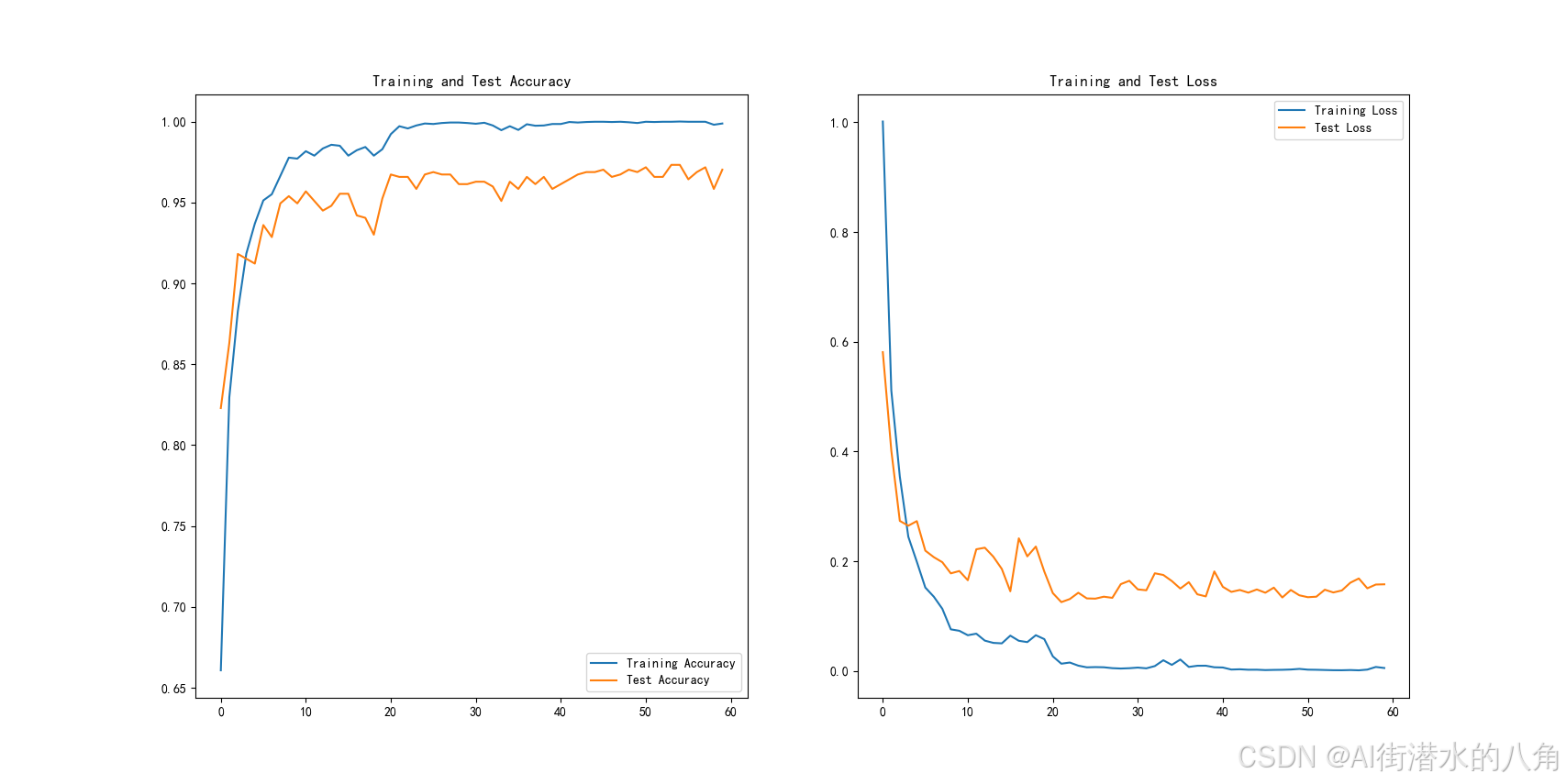
第四步:统计训练过程中验证集准确率和loss变化
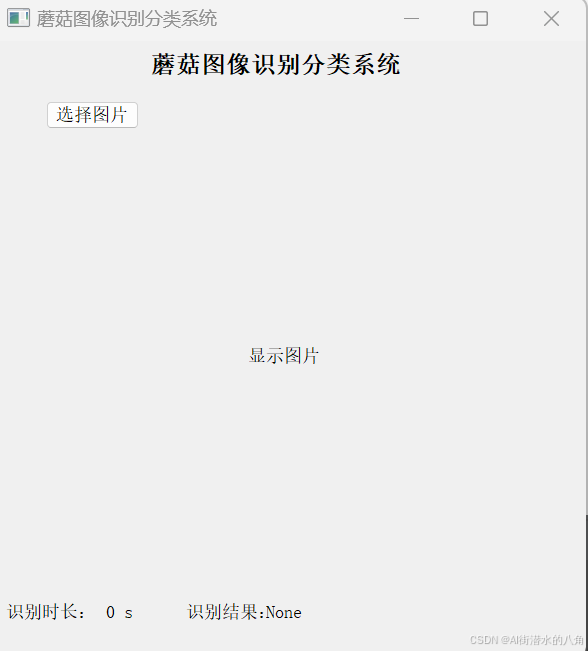
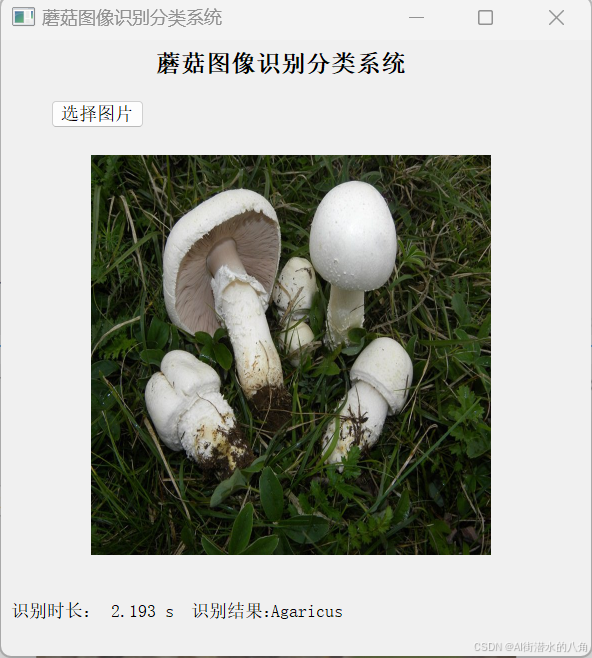
第五步:搭建GUI界面
第六步:整个工程的内容
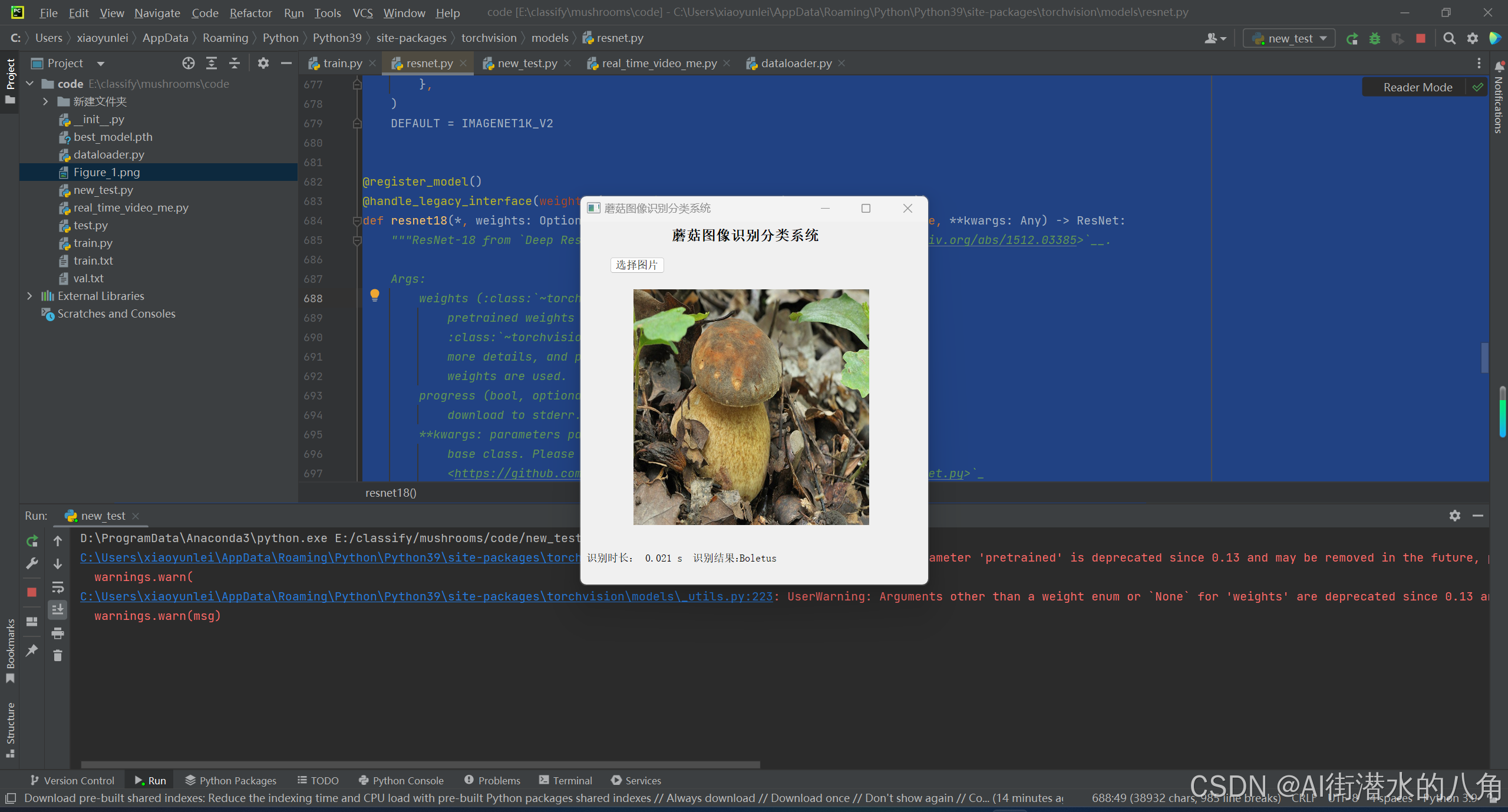
有训练代码和训练好的模型以及训练过程,提供数据,提供GUI界面代码
项目完整文件下载请见演示与介绍视频的简介处给出:➷➷➷
PyTorch框架——基于深度学习ResNet18神经网络蘑菇图像识别分类系统_哔哩哔哩_bilibili


DAMO开发者矩阵,由阿里巴巴达摩院和中国互联网协会联合发起,致力于探讨最前沿的技术趋势与应用成果,搭建高质量的交流与分享平台,推动技术创新与产业应用链接,围绕“人工智能与新型计算”构建开放共享的开发者生态。
更多推荐


 5
5 0
0- 0


 已为社区贡献80条内容

所有评论(0)