基于OpenCV的dnn模块使用YOLOv3/YOLOv3-tiny/YOLOv4-tiny进行目标检测
0、说明:
测试的opencv版本为opencv3.4.5
(如果需要显示图片,在编译的时候cmake .. -D WITH_GTK=ON -D WITH_GTK_2_X=ON)
电脑cup:intel 4代i5(4200U)
1、YOLO介绍:
2、下载yolov3的配置文件:
wget https://github.com/pjreddie/darknet/blob/master/data/coco.names?raw=true -O ./coco.names
wget https://github.com/pjreddie/darknet/blob/master/cfg/yolov3.cfg?raw=true -O ./yolov3.cfg
#wget https://pjreddie.com/media/files/yolov3.weights
wget https://data.pjreddie.com/files/yolov3.weights
yolov3-tiny
wget https://github.com/pjreddie/darknet/blob/master/cfg/yolov3-tiny.cfg?raw=true -O ./yolov3-tiny.cfg
wget https://pjreddie.com/media/files/yolov3-tiny.weights?raw=true -O ./yolov3-tiny.weights
yolov4-tiny
wget https://github.com/AlexeyAB/darknet/blob/master/cfg/yolov4-tiny.cfg?raw=true -O ./yolov4-tiny.cfg
wget https://github.com/AlexeyAB/darknet/releases/download/darknet_yolo_v4_pre/yolov4-tiny.weights?raw=true -O ./yolov4-tiny.weights
3、C++代码:
#include <iostream>
#include <fstream>
#include <opencv2/opencv.hpp>
#include <opencv2/dnn.hpp>
#include <opencv2/dnn/shape_utils.hpp>
#include <opencv2/imgproc.hpp>
#include <opencv2/highgui.hpp>

// Remove the bounding boxes with low confidence using non-maxima suppression
void postprocess(cv::Mat& frame, std::vector<cv::Mat>& outs);

// Get the names of the output layers
std::vector<cv::String> getOutputsNames(const cv::dnn::Net& net);

// Draw the predicted bounding box
void drawPred(int classId, float conf, int left, int top, int right, int bottom, cv::Mat& frame);

// Initialize the parameters
float confThreshold = 0.5; // Confidence threshold
float nmsThreshold = 0.4;  // Non-maximum suppression threshold
int inpWidth = 416;        // Width of network's input image
int inpHeight = 416;       // Height of network's input image

std::vector<std::string> classes;

int main(int argc, char** argv)
{
    // Load names of classes
    std::string classesFile = "/home/alan/Desktop/yolov3/coco.names";
    std::ifstream classNamesFile(classesFile.c_str());
    if (classNamesFile.is_open())
    {
        std::string className = "";
        while (std::getline(classNamesFile, className))
            classes.push_back(className);
    }
    else{
        std::cout<<"can not open classNamesFile"<<std::endl;
    }

    // Give the configuration and weight files for the model
    cv::String modelConfiguration = "/home/alan/Desktop/yolov3/yolov3.cfg";
    cv::String modelWeights = "/home/alan/Desktop/yolov3/yolov3.weights";

    // Load the network
    cv::dnn::Net net = cv::dnn::readNetFromDarknet(modelConfiguration, modelWeights);
    std::cout<<"Read Darknet..."<<std::endl;
    net.setPreferableBackend(cv::dnn::DNN_BACKEND_OPENCV);
    net.setPreferableTarget(cv::dnn::DNN_TARGET_CPU);

    // Process frames.
    std::cout <<"Processing..."<<std::endl;
    cv::VideoCapture cap(0);
    cv::Mat frame;
    while (cv::waitKey(10) != 27)
    {
        // get frame from the video
        cap >> frame;

        //show frame
        cv::imshow("frame",frame);

        // Create a 4D blob from a frame.
        cv::Mat blob;
        cv::dnn::blobFromImage(frame, blob, 1/255.0, cv::Size(inpWidth, inpHeight), cv::Scalar(0,0,0), true, false);

        //Sets the input to the network
        net.setInput(blob);

        // Runs the forward pass to get output of the output layers
        std::vector<cv::Mat> outs;
        net.forward(outs, getOutputsNames(net));

        // Remove the bounding boxes with low confidence
        postprocess(frame, outs);

        // Put efficiency information. The function getPerfProfile returns the
        // overall time for inference(t) and the timings for each of the layers(in layersTimes)
        std::vector<double> layersTimes;
        double freq = cv::getTickFrequency() / 1000;
        double t = net.getPerfProfile(layersTimes) / freq;
        std::string label = cv::format("Inference time for a frame : %.2f ms", t);
        cv::putText(frame, label, cv::Point(0, 15), cv::FONT_HERSHEY_SIMPLEX, 0.5, cv::Scalar(0, 0, 255));

        // Write the frame with the detection boxes
        cv::Mat detectedFrame;
        frame.convertTo(detectedFrame, CV_8U);
        //show detectedFrame
        cv::imshow("detectedFrame",detectedFrame);
    }
    cap.release();
    std::cout<<"Esc..."<<std::endl;
    return 0;
}

// Get the names of the output layers
std::vector<cv::String> getOutputsNames(const cv::dnn::Net& net)
{
    static std::vector<cv::String> names;
    if (names.empty())
    {
        //Get the indices of the output layers, i.e. the layers with unconnected outputs
        std::vector<int> outLayers = net.getUnconnectedOutLayers();

        //get the names of all the layers in the network
        std::vector<cv::String> layersNames = net.getLayerNames();

        // Get the names of the output layers in names
        names.resize(outLayers.size());
        for (size_t i = 0; i < outLayers.size(); ++i)
            names[i] = layersNames[outLayers[i] - 1];
    }
    return names;
}

// Remove the bounding boxes with low confidence using non-maxima suppression
void postprocess(cv::Mat& frame, std::vector<cv::Mat>& outs)
{
    std::vector<int> classIds;
    std::vector<float> confidences;
    std::vector<cv::Rect> boxes;

    for (size_t i = 0; i < outs.size(); ++i)
    {
        // Scan through all the bounding boxes output from the network and keep only the
        // ones with high confidence scores. Assign the box's class label as the class
        // with the highest score for the box.
        float* data = (float*)outs[i].data;
        for (int j = 0; j < outs[i].rows; ++j, data += outs[i].cols)
        {
            cv::Mat scores = outs[i].row(j).colRange(5, outs[i].cols);
            cv::Point classIdPoint;
            double confidence;
            // Get the value and location of the maximum score
            cv::minMaxLoc(scores, 0, &confidence, 0, &classIdPoint);

            if (confidence > confThreshold)
            {
                int centerX = (int)(data[0] * frame.cols);
                int centerY = (int)(data[1] * frame.rows);
                int width = (int)(data[2] * frame.cols);
                int height = (int)(data[3] * frame.rows);
                int left = centerX - width / 2;
                int top = centerY - height / 2;

                classIds.push_back(classIdPoint.x);
                confidences.push_back((float)confidence);
                boxes.push_back(cv::Rect(left, top, width, height));
            }
        }
    }

    // Perform non maximum suppression to eliminate redundant overlapping boxes with
    // lower confidences
    std::vector<int> indices;
    cv::dnn::NMSBoxes(boxes, confidences, confThreshold, nmsThreshold, indices);
    for (size_t i = 0; i < indices.size(); ++i)
    {
        int idx = indices[i];
        cv::Rect box = boxes[idx];
        drawPred(classIds[idx], confidences[idx], box.x, box.y,
                 box.x + box.width, box.y + box.height, frame);
    }
}

// Draw the predicted bounding box
void drawPred(int classId, float conf, int left, int top, int right, int bottom, cv::Mat& frame)
{
    //Draw a rectangle displaying the bounding box
    cv::rectangle(frame, cv::Point(left, top), cv::Point(right, bottom), cv::Scalar(0, 0, 255));

    //Get the label for the class name and its confidence
    std::string label = cv::format("%.2f", conf);
    if (!classes.empty())
    {
        CV_Assert(classId < (int)classes.size());
        label = classes[classId] + ":" + label;
    }
    else
    {
        std::cout<<"classes is empty..."<<std::endl;
    }

    //Display the label at the top of the bounding box
    int baseLine;
    cv::Size labelSize = cv::getTextSize(label, cv::FONT_HERSHEY_SIMPLEX, 0.5, 1, &baseLine);
    top = std::max(top, labelSize.height);
    cv::putText(frame, label, cv::Point(left, top), cv::FONT_HERSHEY_SIMPLEX, 0.5, cv::Scalar(255,255,255));
}
4、解析:
(1)cv::dnn::blobFromImage函数解析:
函数原型:
  CV_EXPORTS_W Mat blobFromImage(InputArray image, double scalefactor=1.0, const Size& size = Size(),
                                   const Scalar& mean = Scalar(), bool swapRB=true, bool crop=true);
CMakeLists.txt
cmake_minimum_required(VERSION 2.8)
project(image_detect)

set(CMAKE_CXX_STANDARD 11)
set(EXECUTABLE_OUTPUT_PATH ${PROJECT_SOURCE_DIR}/bin)

set(OpenCV_DIR /home/alan/alan_lib/opencv-3.4/build)
find_package(OpenCV 3.4)
include_directories(${OpenCV_INCLUDE_DIRS})

add_executable (image_detect main.cc)
target_link_libraries (image_detect ${OpenCV_LIBS})
参数解析:
第一个参数,image,表示输入的图像,可以是opencv的mat数据类型。
第二个参数,scalefactor,这个参数很重要的,如果训练时,是归一化到0-1之间,那么这个参数就应该为0.00390625f (1/256),否则为1.0
第三个参数,size,应该与训练时的输入图像尺寸保持一致。
第四个参数,mean,这个主要在caffe中用到,caffe中经常会用到训练数据的均值。tf中貌似没有用到均值文件。
第五个参数,swapRB,是否交换图像第1个通道和最后一个通道的顺序。
第六个参数,crop,输入图像大小与size不符的时候,如果为true,就是裁剪图像,如果为false,就是等比例放缩图像。
(2)cv::dnn::Net::forward函数解析:
forward的函数原型有4个,分别提供了不同的功能:
- 第一个
cv::dnn::Net::forward(const String & outputName = String())这个函数只需要提供layer的name即可;函数返回一个Mat变量,返回值是指输入的layername首次出现的输出。
默认输出整个网络的运行结果。
- 第二个
void cv::dnn::Net::forward(OutputArrayOfArrays outputBlobs,
const String & outputName = String())
该函数的返回值是void,通过OutputArrayOfArrays类型提供计算结果,类型为blob。这个outputName依然是layer的name,outputBlobs不是首次layer的输出了,而是layername指定的layer的全部输出;多次出现,就提供多个输出。
- 第三个
void cv::dnn::Net::forward(OutputArrayOfArrays outputBlobs,
const std::vector<String> & outBlobNames)
该函数返回值为void,outBlobNames是需要提供输出的layer的name,类型为vector,也就是说可以提供多个layer的那么;它会将每个layer的首次计算输出放入outputBlobs。
- 第四个
void cv::dnn::Net::forward(std::vector<std::vector<Mat>> & outputBlobs,
const std::vector<String> & outBlobNames)
该函数的功能是最强大的,返回值为void;输入outBlobNames是vector类型,outputBlobs是vector<std::vector<Mat>>类型;该函数可以输入多个layer的name;它会输出每个layer的全部输出到outputBlobs中。
(3)网络前向传播后的输出格式解析:
Mat outs是一个输入图像经过网络前向传播后输出的85*845矩阵,其定义如下图所示:
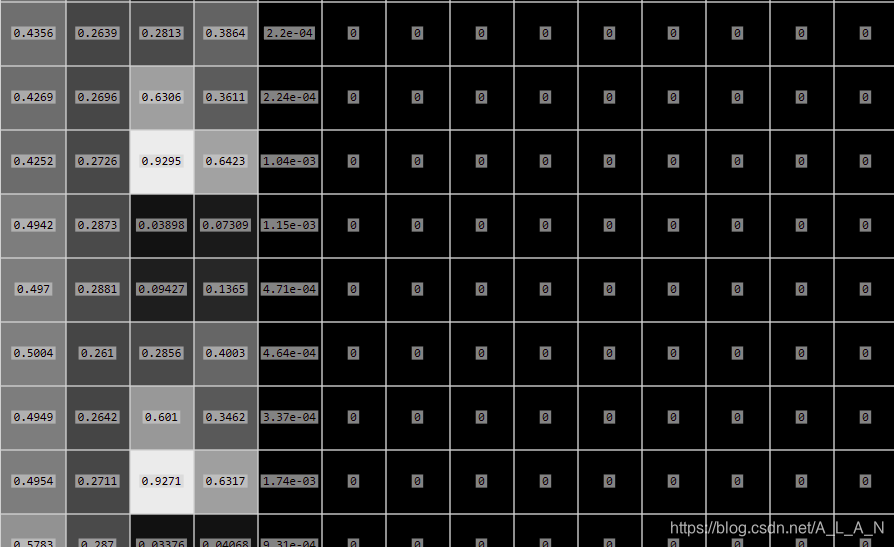
行向量解析:前面4个元素是用来标记目标在图像上的位置的(被归一化了),第5个元素是置信概率,值域为[0-1](用来与阈值作比较决定是否标记目标),后面80个为基于COCO数据集的80分类的标记权重,最大的为输出分类。
列向量解析:为什么是845个?因为YOLO会把图像分成13*13的网格,每个网格预测5个BOX(所以就是13*13*5=845),每个BOX就是一个行向量。
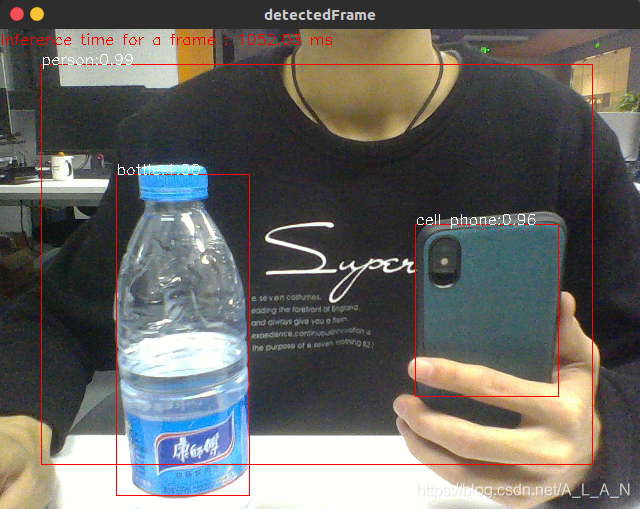
5、结果:
参考:
Deep Learning based Object Detection using YOLOv3 with OpenCV ( Python / C++ )
YOLOv3在OpenCV4.0.0/OpenCV3.4.2上的C++ demo实现
https://pjreddie.com/darknet/yolo/
其他yolo版本模型下载
wget https://github.com/ultralytics/yolov5/releases/download/v7.0/yolov5n.onnx?raw=true -O ./yolov5n.onnx

wget https://github.com/ultralytics/yolov5/releases/download/v7.0/yolov5s.onnx?raw=true -O ./yolov5s.onnx

wget https://github.com/yoobright/yolo-onnx/blob/master/yolov8n.onnx?raw=true -O ./yolov8n.onnx
DAMO开发者矩阵,由阿里巴巴达摩院和中国互联网协会联合发起,致力于探讨最前沿的技术趋势与应用成果,搭建高质量的交流与分享平台,推动技术创新与产业应用链接,围绕“人工智能与新型计算”构建开放共享的开发者生态。
更多推荐

 10
10 0
0- 0


 已为社区贡献2条内容

所有评论(0)